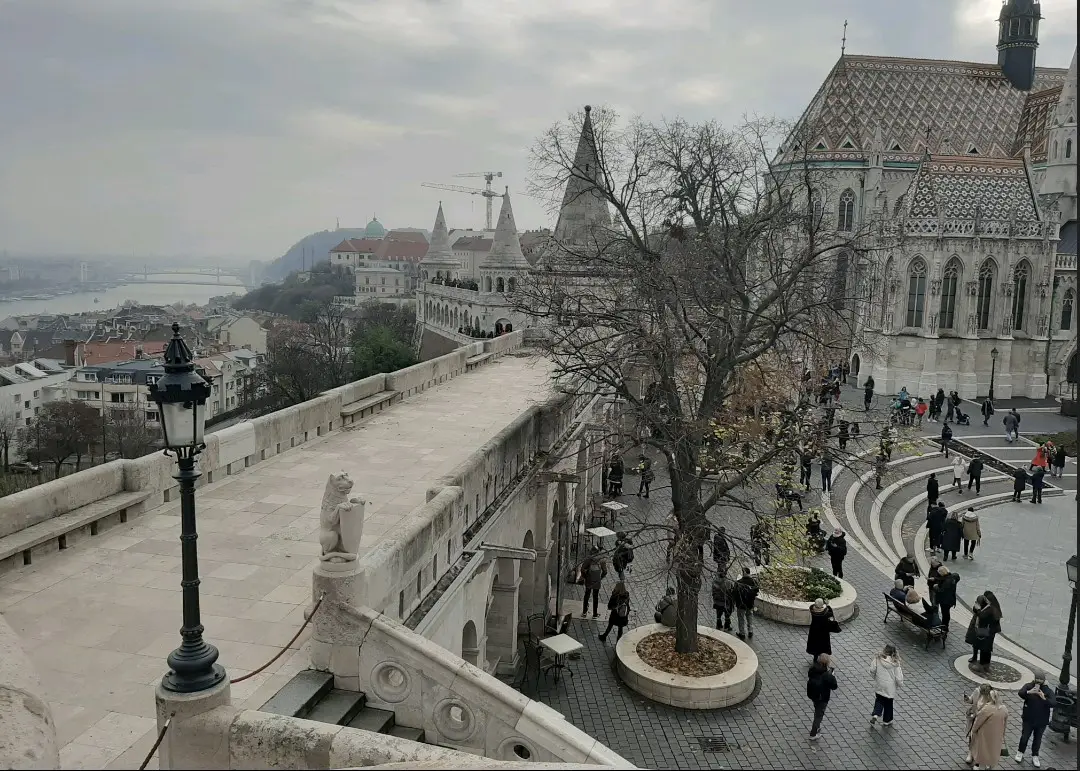
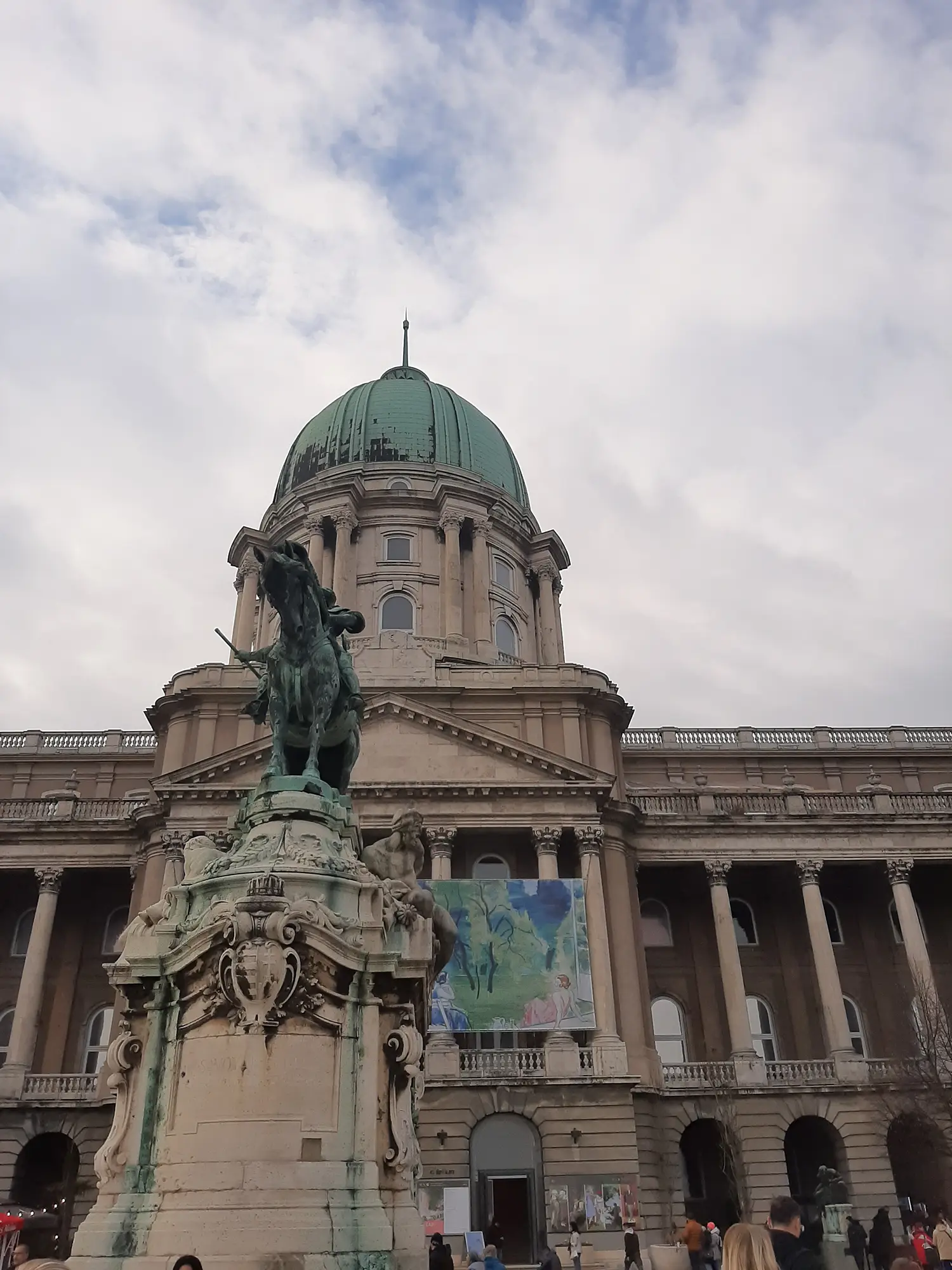
By the 13th century, the settlement had evolved into Óbuda, meaning “Old Buda.” During this period, two distinct urban centers emerged on opposite sides of the Danube River: Buda on the western bank and Pest on the eastern bank. Their geographical separation influenced their different political and economic roles.
Buda gained prominence and was declared the capital of the Kingdom of Hungary in 1361. However, the region was profoundly affected by Ottoman expansion in the 16th century. Pest was conquered by the Ottoman Empire in 1526, followed by the fall of Buda in 1541. Under Ottoman rule, Buda served as the capital of the Budin Province and became an important administrative center, while Pest experienced significant decline and was largely abandoned.
Ottoman control ended in 1686 when Habsburg forces captured Buda, bringing the region under Habsburg rule.
A major political transformation occurred in 1867 with the Austro-Hungarian Compromise, which established the Austro-Hungarian Empire and granted Hungary increased autonomy. In 1873, the towns of Óbuda, Buda, and Pest were officially unified into a single city, forming modern Budapest.
The etymology of the city’s name reflects its multicultural past. The name “Pest” is likely of Slavic origin, meaning “furnace,” possibly referring to caves or thermal activity in the area, while “Buda” may derive from the Slavic word voda, meaning “water,” referencing the Danube River.
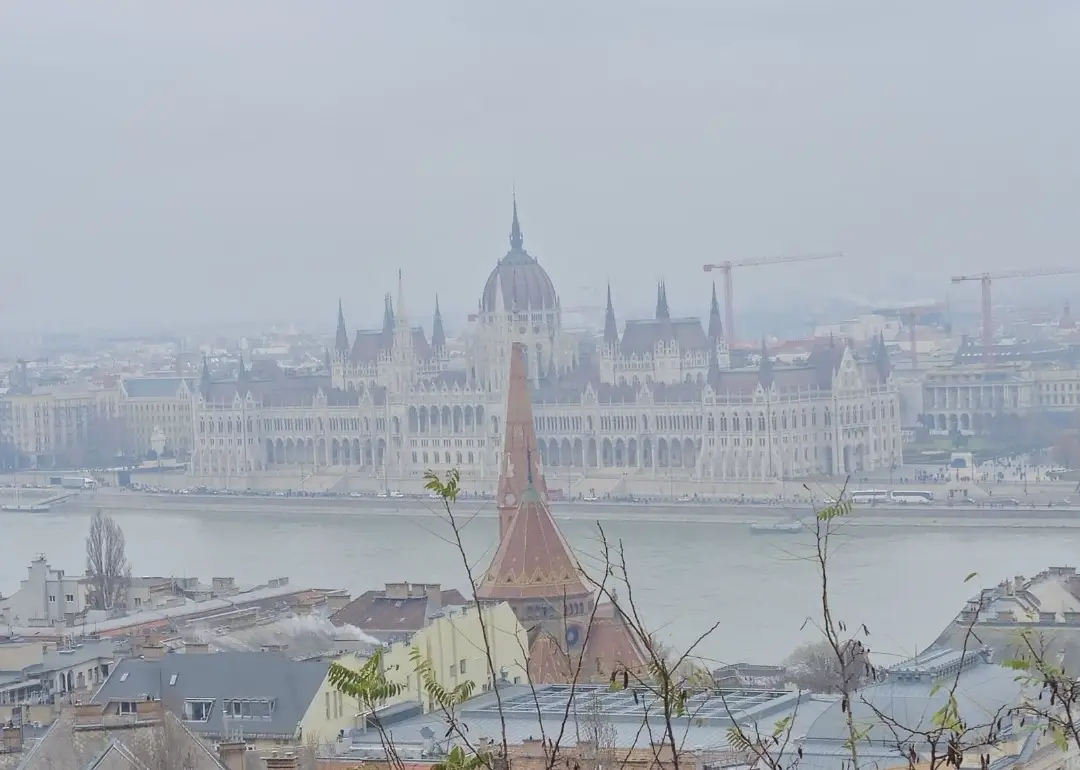
The Hungarian Parliament Building, known as Országház, serves as the seat of the National Assembly of Hungary and is one of the country’s most iconic national symbols. Located prominently on the eastern bank of the Danube River, the building occupies a central position within Budapest’s urban and political landscape, making it one of the city’s most recognizable landmarks.
The Parliament Building is the largest structure in Hungary and ranks among the tallest buildings in Budapest, emphasizing its importance as a symbol of state authority and national identity. Construction of the building began in the late 19th century and was completed in 1904, almost two decades after work on the project first started.
The building was designed by the Hungarian architect Imre Steindl, who combined elements of Gothic Revival and Renaissance Revival architectural styles. The Gothic Revival influence is particularly evident in the building’s pointed arches, spires, and elaborate ornamentation, while Renaissance Revival features contribute to its balanced proportions and monumental symmetry. Together, these styles create a highly decorative and monumental structure that reflects Hungary’s historical heritage and political aspirations at the time of its construction.
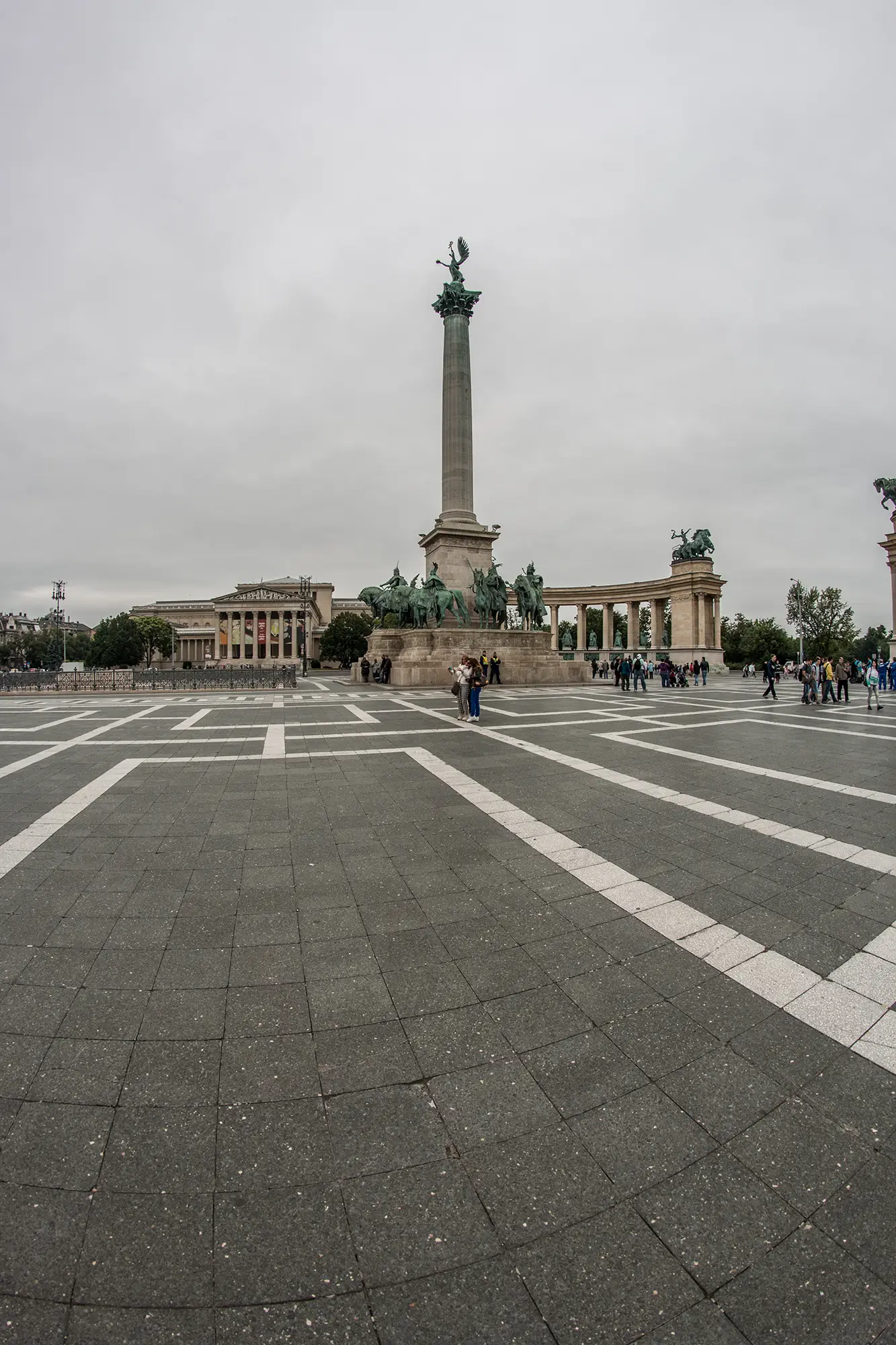
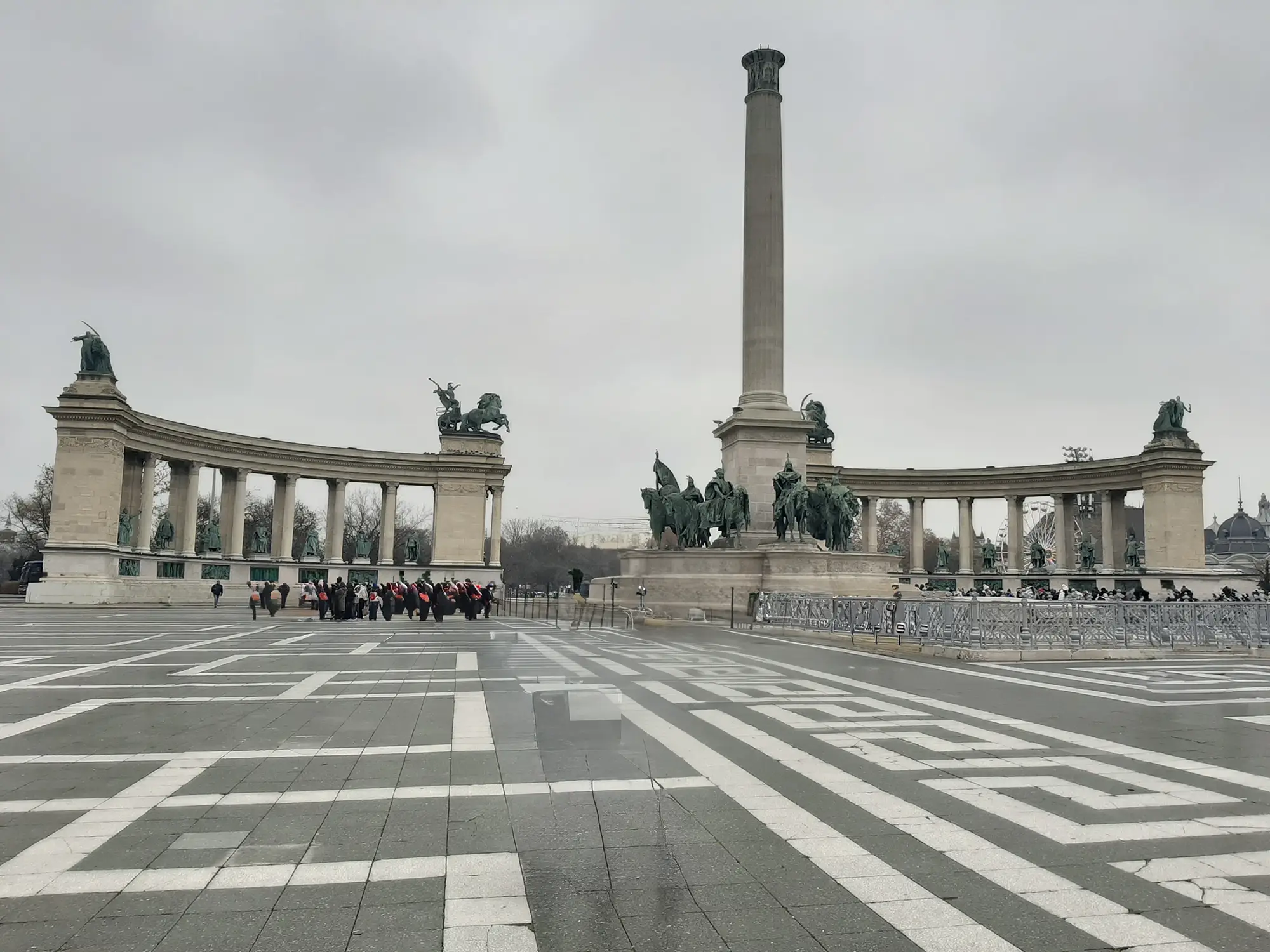
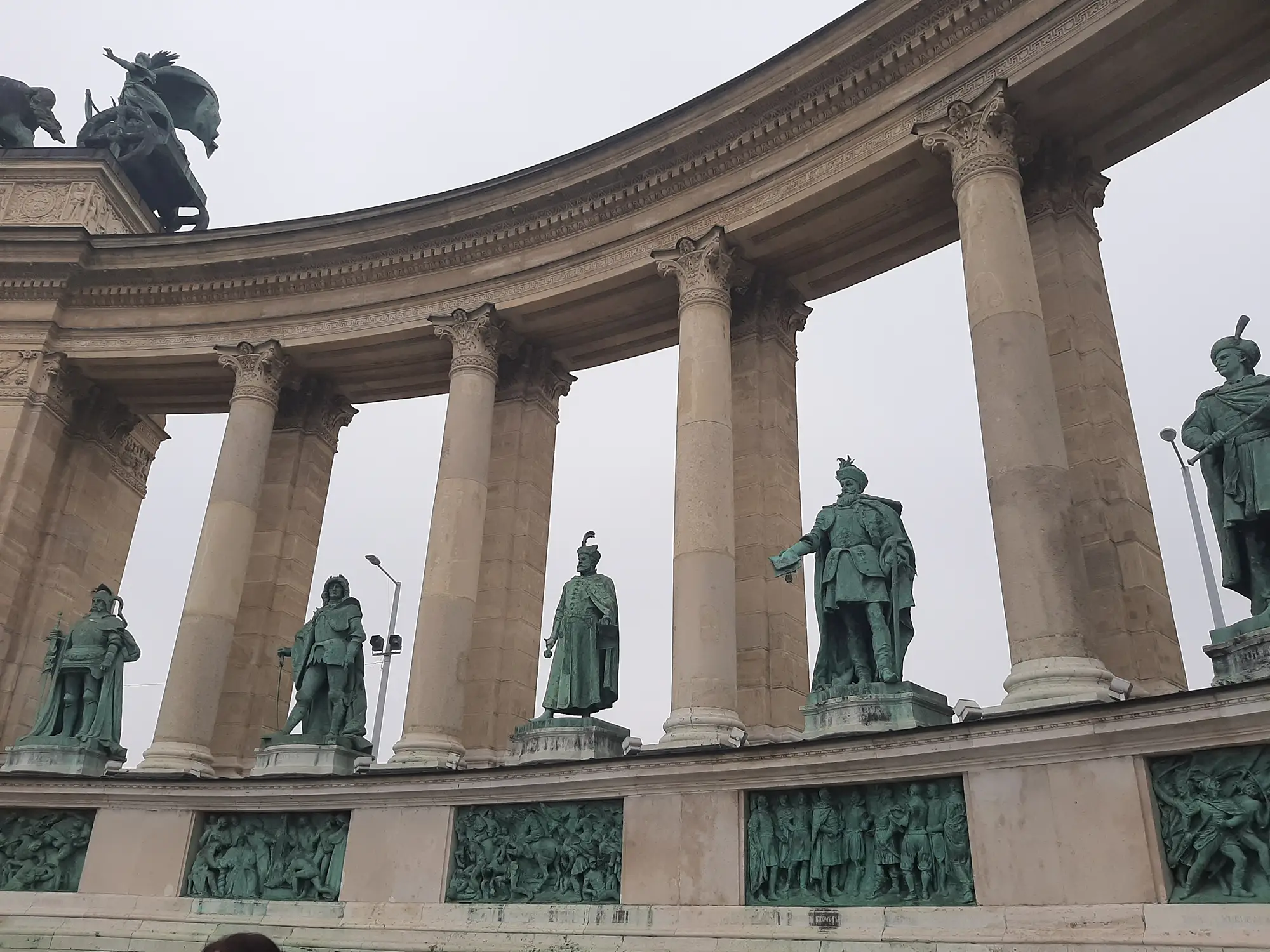
Heroes’ Square (Hősök tere) is one of the most important public spaces and a major landmark of Budapest, with the Millennium Memorial forming its central and most prominent feature. The construction of the monument began in 1896 as part of the celebrations marking the thousandth anniversary of the Hungarian conquest of the Carpathian Basin and the establishment of the Hungarian state in 896. The square and its monument were intended to symbolize national unity, historical continuity, and Hungarian identity.
The Millennium Memorial is composed of a large semicircular colonnade divided into two symmetrical sections. Each colonnade contains seven statues representing influential leaders, rulers, and key figures from Hungarian history. At the center of the monument stands a tall column topped with the Archangel Gabriel, a symbolic figure in Hungarian history and Christian tradition.
In front of the monument lies the Memorial Stone of Heroes, which was originally erected in 1929 to honor those who sacrificed their lives in defense of Hungary over the course of the past thousand years.
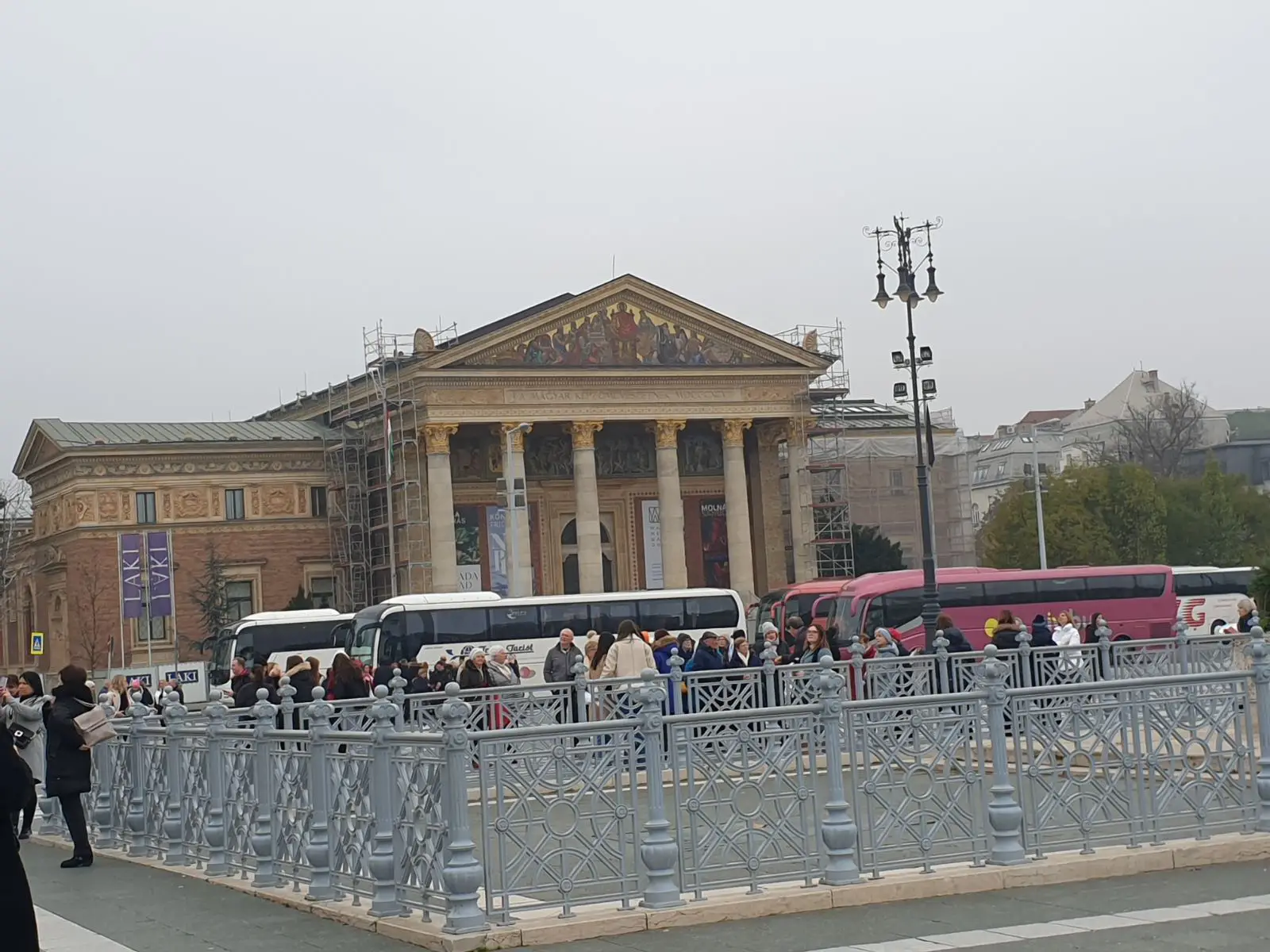
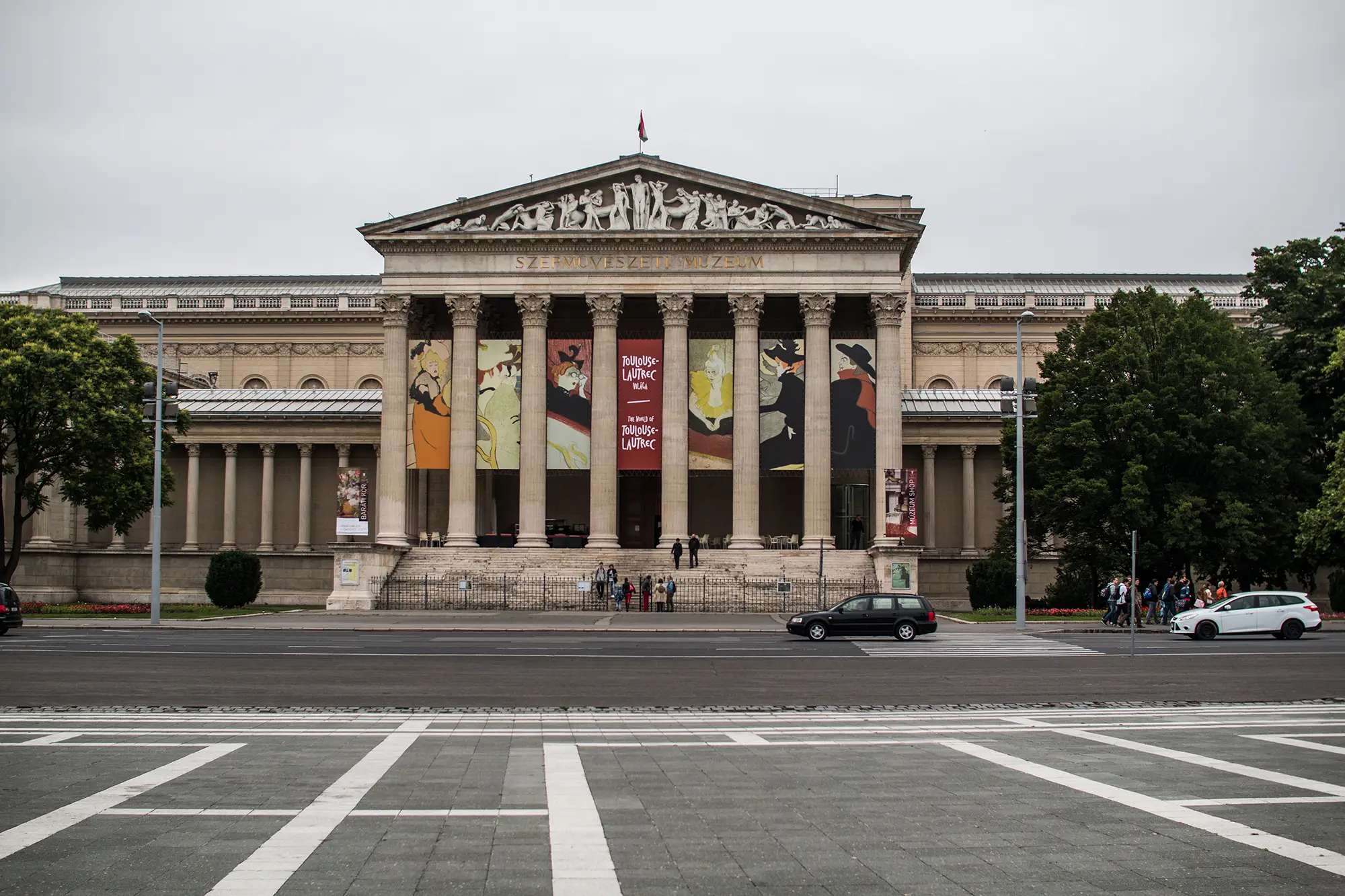
Heroes’ Square is further framed by two significant cultural institutions: the Museum of Fine Arts on one side and the Palace of Art (Műcsarnok) on the other. Together with the Millennium Memorial, these buildings contribute to the square’s function as a major cultural, historical, and ceremonial center in Budapest.
The Museum of Fine Arts in Budapest was officially opened to the public in 1906 and has since become one of the most important cultural institutions in Hungary. The museum houses an extensive collection that presents both Hungarian and international art history, offering a comprehensive overview of the major artistic movements and styles that have shaped European art.
Its holdings span nearly all periods of European art, from antiquity and the Middle Ages through the Renaissance, Baroque, and modern eras. Today, the museum’s collection comprises more than 120,000 artworks, including paintings, sculptures, drawings, prints, and decorative art objects.
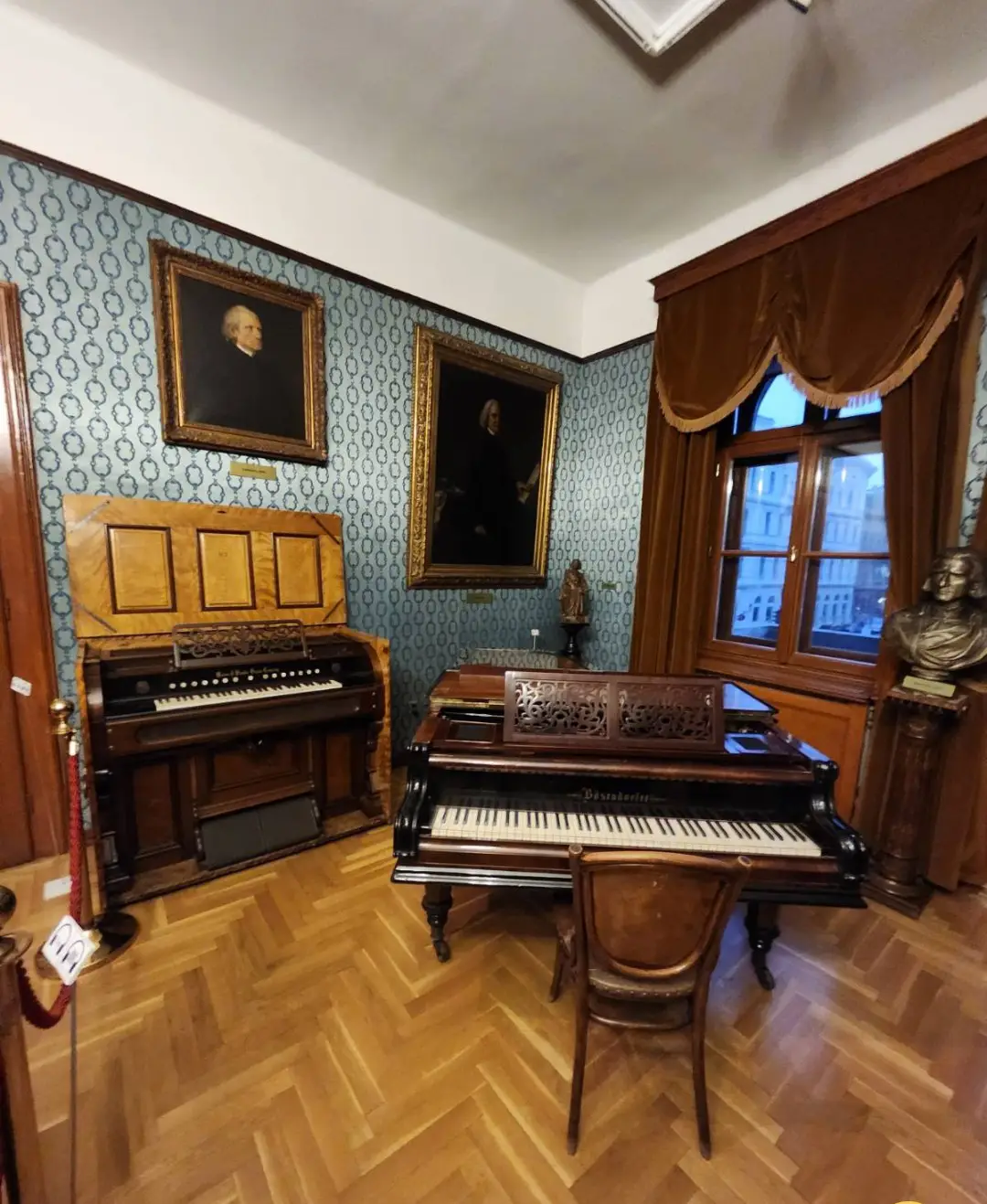
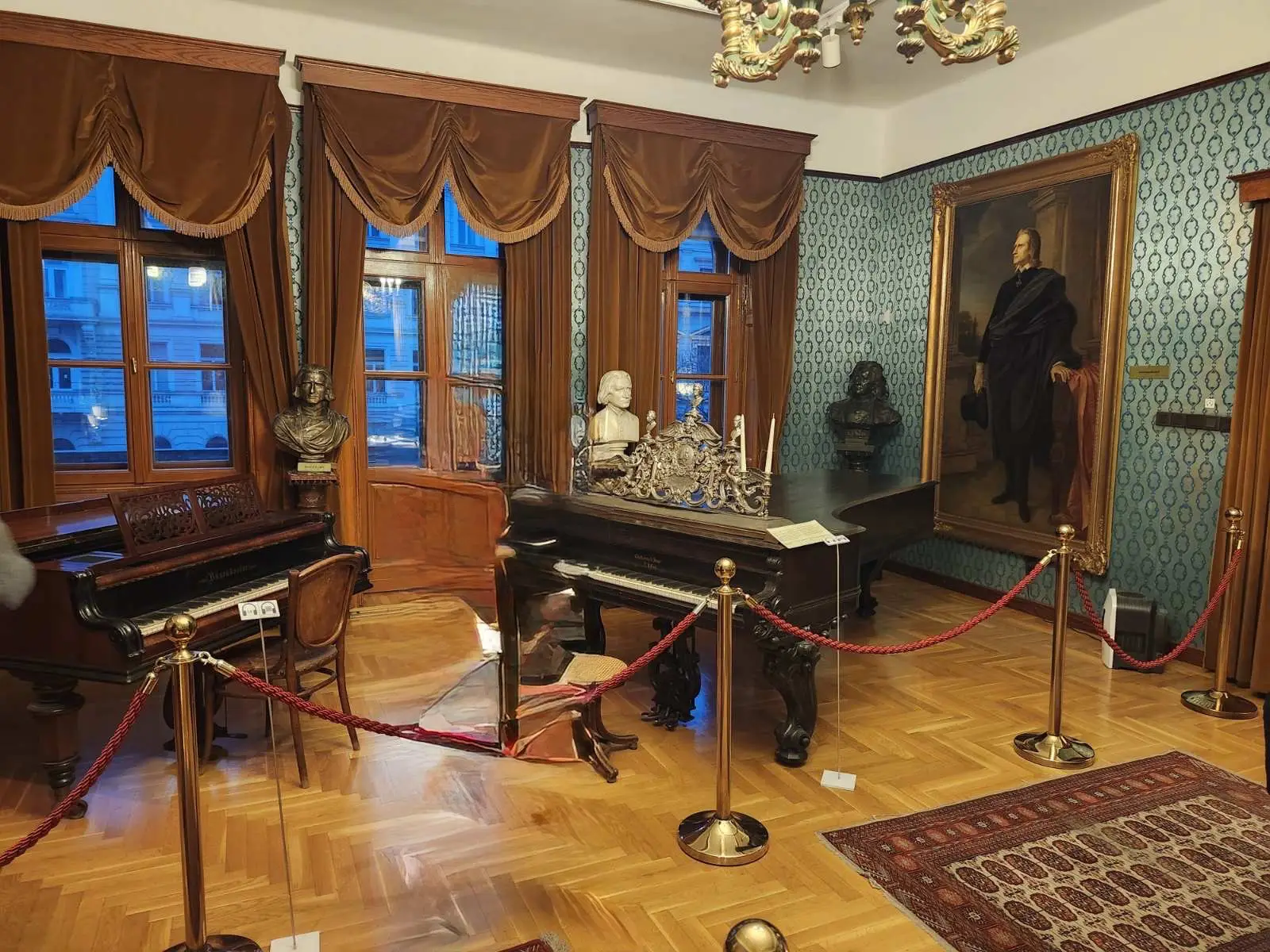
The Franz Liszt Memorial Museum is dedicated to preserving and promoting the life, work, and legacy of Franz Liszt (1811 – 1886), the internationally renowned composer, virtuoso pianist, influential teacher, and one of the founders of the Academy of Music in Budapest. Liszt embodied both strong patriotic commitment and a broad European intellectual outlook, which has earned him lasting admiration and respect across different cultures and historical periods.
The museum exhibits Liszt’s original musical instruments, furniture, and personal belongings, offering visitors direct insight into his everyday life and artistic environment. On the other hand, it supports academic research by preserving and providing access to digitized manuscripts, books, correspondence, and musical scores related to Liszt and his era.