All events will be released as a podcast series on The Eurasian Knot Summer 2023.
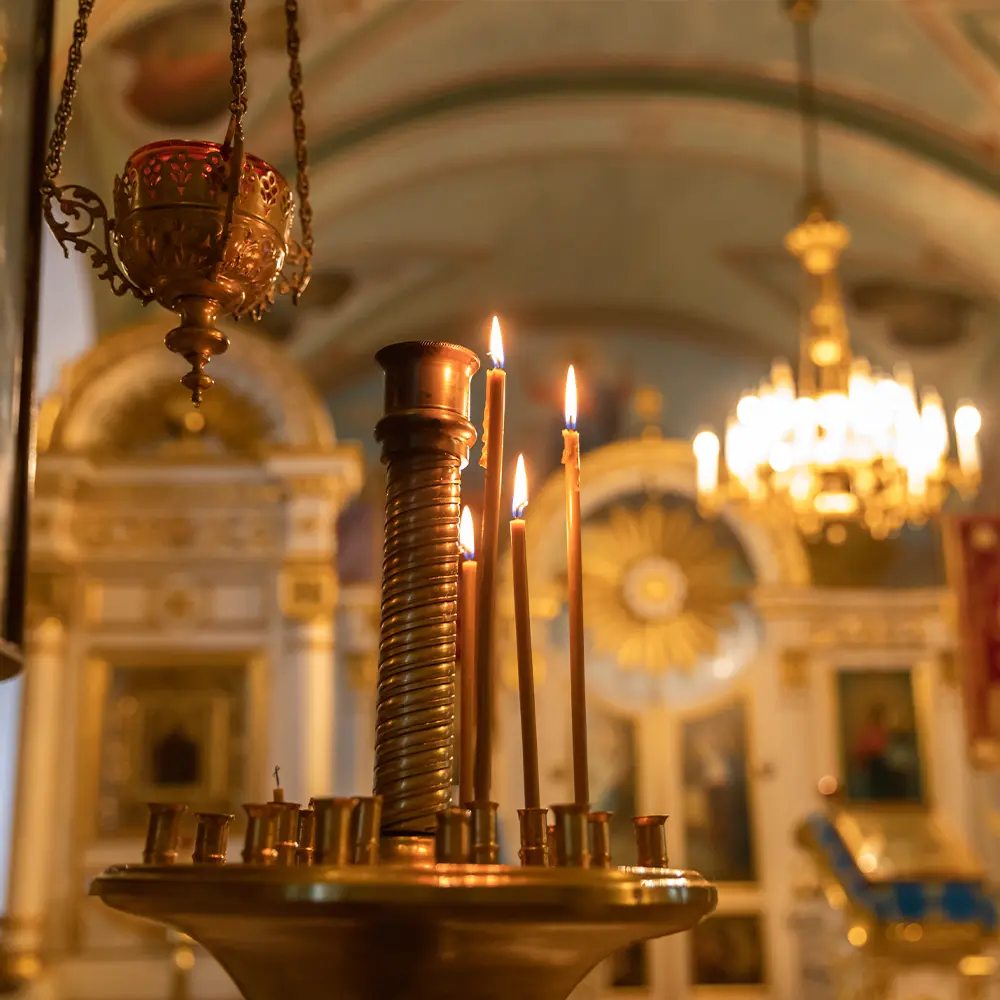
Soviet ideology treated religion as an enemy, a tool of oppression and an expression of backwardness. Militant atheism, the prohibition of religious rituals, and the repression of religious communities aimed to create a secular, rational, and scientific society. Yet, religion mattered in Soviet people’s lives. And with institutional religion restricted, many people expressed their spirituality through “lived religion”—the practice of religion and spirituality in their everyday lives. What were the practices of lived religion in the context of state socialism? And how did it converge and diverge with the return of institutionalized religion and spiritual life after the collapse of communism?
This Spring 2023, the Center for Russian, Eurasian and East European Studies at the University of Pittsburgh in collaboration with Zuzanna Bogumil (Institute of Archaeology and Ethnology, Polish Academy of Sciences) is organizing an interview series Religion in (Post-)Socialist Societies. The events will explore the role of religion in socialist and post-socialist societies in eight online discussions on religion and its relations to repression, nation-building, indigenous cultures, and memory.
Catherine Wanner, Pennsylvania State University
Anca Șincan, Gheorghe Sincai Institute of the Romanian Academy
Tatiana Vagramenko, University College Cork
Geneviève Zubrzycki, University of Michigan
José Casanova, Georgetown University
Lap Yan Kung, Chinese University of Hong Kong
Fenggang Yang, Perdue University
Katya Tolstoj, Vrije Universiteit Amsterdam
Marjorie Mandelstam Balzer, Georgetown University
Elmira Muratova, Aarhus Institute of Advanced Studies
Michael Kemper, University of Amsterdam